Prompt Design · Chapter 5 · Lesson 1 · 5 min read
When one prompt is not enough
One prompt, one response works fine for simple tasks. As tasks grow more complex, it breaks down.
This is not a lack of capability. Doing several things at once means trading them off. A prompt that asks the model to research, reason, and format in a single pass optimizes for three goals at once, and the result is usually mediocre at all three.
When a task requires multiple distinct steps, breaking it into a sequence of focused prompts produces better results than combining everything into one.
Three signals that a task needs decomposing
Not every complex task needs splitting. The cases where decomposition helps share recognizable patterns.
The first is sequential dependency. One step’s output is the next step’s input. Summarising a document and then translating the summary is two tasks. Extracting key claims and then fact-checking each is two tasks. When the second step depends on the first being done well, separating them gives the model a cleaner job at each stage.
The second is conflicting constraints. Some constraints pull in opposite directions. “Write a detailed analysis but keep it under 100 words” asks the model to be thorough and brief at once. It will compromise, but a compromise is not what either constraint wanted. Splitting into “write the full analysis” then “condense to under 100 words” lets each prompt optimize for one thing.
The third is quality gates. Some tasks benefit from a check before proceeding. Rather than producing a final output in one step, you generate a draft, evaluate it against your criteria, then revise. Each is a separate prompt, and the evaluation catches problems before they propagate.
What decomposition looks like in practice
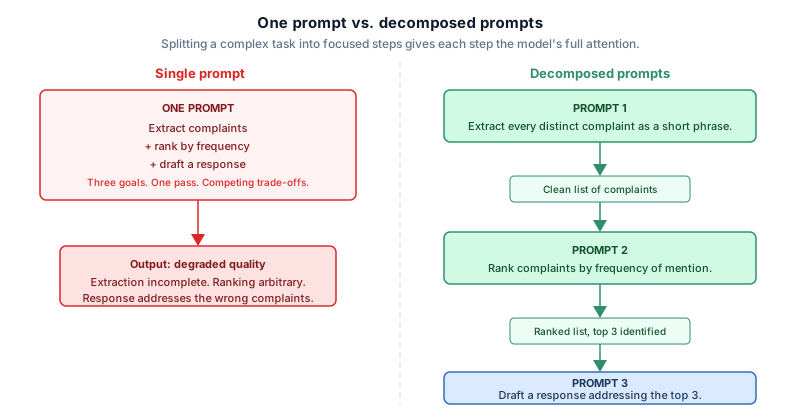
Consider: “Read this customer feedback, identify the main complaints, prioritise them by frequency, and draft a response addressing the top three.”
As a single prompt, the model reads, extracts, ranks, and writes all at once. Each step has its own quality requirements and does not benefit from the same kind of attention.
Decomposed, the same task becomes:
Prompt 1: Extract every distinct complaint from the following customer feedback.
          List each one as a short phrase.

Prompt 2: Here is a list of complaints. Rank them from most to least frequently
          mentioned in the original feedback.

Prompt 3: Here are the top three complaints. Draft a professional response
          that acknowledges each one and outlines next steps.
Each prompt has one job, and the output of each step is clean enough to serve as reliable input to the next.
Decomposition is not always the answer
Decomposition adds steps, and more steps mean more prompts, more latency, and more places to go wrong. A task that fits in one prompt should stay there.
The decision is one question: is the model being asked to optimize for more than one thing at once, and are those things in tension? If yes, decompose. If not, keep it simple.
In the next lesson, we’ll connect decomposed steps into a chain, and look at what to watch for when one prompt’s output becomes the next one’s input.